
 CZ
CZ EN
EN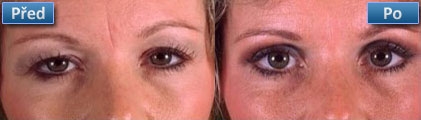
Eyelid surgery addresses the following issues in particular:
Are you a suitable candidate for eyelid surgery?
- Drooping of the upper eyelid over the edge of the pupil (so-called ptosis)
This is caused by insufficiency of the muscle that lifts the eyelid—either congenital (if the muscle does not fully develop) or acquired (due to weakening or impaired innervation). If the upper eyelid overlaps the pupil, it leads to a narrowing of the visual field, which negatively affects vision and may even result in headaches. - Fat herniation
The eyes rest in the skull on fat pads, parts of which, with age, can protrude under the skin of the eyelids as so-called fat herniations. This most commonly causes the formation of well-known “bags” under the eyes, especially in the lower eyelids. In this case, it is advisable not to delay surgery—while the skin is still sufficiently elastic, it can return to its original position after removal of the fat herniation. If the skin sags down to the level of the cheek, the procedure becomes more complex. - Excess loose skin (so-called dermatochalasis)
This occurs as a result of loss of skin elasticity, especially in combination with fat herniation that pushes the skin from beneath. Excess skin more often affects the upper eyelids, where it can be more extensive. These excesses may form folds and gradually, due to their weight, hinder the movement of the upper eyelid, cause its drooping (so-called pseudoptosis), and lead to eye fatigue accompanied by tearing or headaches. In addition to age, genetic predisposition also influences the tendency to form excess skin. Therefore, although most patients seeking blepharoplasty are between 40 and 50 years of age, younger individuals may also be indicated. The upper age limit for surgery is determined by the patient’s overall good health.
A clear answer as to whether eyelid surgery is suitable for you can be obtained through a consultation with one of our plastic surgeons. During the consultation, the surgeon will recommend the appropriate procedure, explain the expected results in detail, and inform you about potential risks.
Before the surgery
If you decide after the consultation to undergo eyelid surgery, you will schedule the procedure and receive preoperative instructions. At least one week before the procedure, it is not advisable to take medications containing salicylates, which reduce blood clotting and increase the risk of bleeding. We recommend arranging accompaniment and transportation home in advance, as driving is not possible after the procedure. Do not forget to bring dark sunglasses, which you will use after surgery. On the day of the procedure, do not apply makeup and remove contact lenses. The surgery itself is performed on the same day you arrive at the clinic.
Course of the surgery
At our clinic, two types of blepharoplasty are performed:
- Classic upper eyelid surgery
This is an outpatient procedure performed under local anesthesia and lasts approximately 60 minutes. Excess skin is removed, fat pads near the inner corners of the eyes are eliminated, and in some cases the orbicularis oculi muscle is tightened. - Classic lower eyelid surgery
Similarly to upper eyelids, lower eyelids are operated on under local anesthesia. The surgeon removes excess skin and fat pads from three compartments that cause “bags” under the eyes. This method is preferred in cases of more significant skin excess.
As mentioned above, the procedures can be combined as needed—upper eyelid surgery together with lower eyelid surgery.
After the surgery
After classic blepharoplasty, the patient goes home the same day; after laser surgery of the lower eyelids, the patient remains at the clinic until the following day. After classic procedures, sutures remain and are usually removed on the 7th day after surgery. The duration of home recovery, during which swelling and bruising subside, and the time until full physical activity is possible vary depending on the type of procedure:
- Classic upper eyelid surgery – 7 days of home recovery, full activity after 2 weeks.
- Classic lower eyelid surgery – 7 days of home recovery (maximum time spent in a horizontal position), full activity after 3 weeks.
When will the results of the surgery be visible?
After the first week, the most significant swelling subsides. Following classic blepharoplasty, pinkish scars may still be visible, but over time (within several months) they fade and become virtually unnoticeable.
The duration of the effect is highly individual. Literature reports 5–10 years, but based on experience, significant variations in both directions are known. The procedure can be repeated if necessary.
