 CZ
CZ EN
EN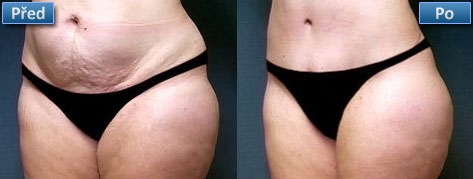
Are you a suitable candidate for abdominoplasty?
Abdominoplasty may be the right solution for you if you are concerned about:
- loose abdominal skin after pregnancy
Especially after multiple pregnancies, the skin may lose elasticity and fail to return to its original state. This is often compounded when the separated rectus abdominis muscles do not come back together after childbirth. After delivery, the abdominal muscles and skin should be given at least one year to recover naturally as much as their properties allow. It is also advisable to wait until breastfeeding has ended before undergoing surgery. Women are recommended to have abdominoplasty only when they are not planning further pregnancies—this significantly improves the effect of the surgery and makes the result more permanent. However, undergoing the procedure does not prevent future pregnancies.
- sagging skin after significant weight loss
After major weight loss, the skin may no longer be elastic enough to adapt to the reduced volume, remaining stretched and forming unattractive skin folds or protruding when viewed from the side. In such cases, it is best to undergo abdominoplasty only once no further significant weight loss is planned. With stable body weight, the result is again permanent.
- separation of the rectus abdominis muscles
The rectus abdominis muscles may separate for other reasons as well (e.g. injury), resulting in insufficient abdominal support and outward stretching of the skin. The abdominal wall can also be operated on separately as a procedure covered by health insurance, where the abdominal muscles are reinforced by suturing them together along the midline through a vertical incision. However, this procedure does not address excess skin.
- stretch marks (in combination with any of the above issues)
Rapid stretching of the skin during pregnancy or sudden weight gain often causes the skin to crack under tension, resulting in stretch marks of varying size. During abdominoplasty, stretch marks in the lower abdomen can be removed together with excess skin.
Whether abdominoplasty is suitable for you should always be discussed with a plastic surgeon. During the consultation, the surgeon will examine you and, if appropriate, recommend the type of abdominoplasty, as the procedure can be performed to varying extents (see below: Course of the surgery).
Abdominoplasty is an extensive operation involving a sensitive abdominal area, and excellent overall health is a prerequisite. The surgeon will inform you of the risks during the consultation, and you should not hesitate to ask questions if anything is unclear.
Before abdominoplasty
If you decide during the consultation to proceed with surgery, you will schedule a preoperative examination and the operation itself. You will also receive instructions regarding preoperative preparation. At least one week before surgery, medications containing acetylsalicylic acid should not be taken, as they increase the risk of excessive bleeding during and after the operation. We also recommend discontinuing hormonal contraception one month prior to surgery. It is advisable to arrange transportation with an accompanying person in advance, as driving or using public transport is not suitable in the postoperative state. If you regularly take any medication, do not forget to bring it with you to the clinic.
Abdominoplasty – course of the surgery
We distinguish two basic types of abdominoplasty that differ in extent:
Abdominoplasty – full abdominal wall surgery
Complete abdominoplasty takes approximately 2–3 hours and is performed under general anesthesia. The surgeon makes a long incision in the lower abdomen between the hip bones so that the resulting scar can be concealed by underwear. The skin and subcutaneous tissue are separated from the abdominal muscles up to the ribs and sternum. In most cases, the navel is cut out as an island so that it can be repositioned into a natural location after the skin is tightened. If the rectus abdominis muscles are separated, the surgeon reinforces them by suturing them together along the midline. In some cases, it is also appropriate to suction or surgically remove subcutaneous fat either before or during the operation. The skin is pulled downward, excess skin is removed, and the incision is closed in several layers, usually with absorbable sutures.
Mini abdominoplasty – partial abdominoplasty
Mini abdominoplasty is a less extensive procedure that addresses excess skin only in the lower or, in some cases, upper abdomen, with the boundary at the level of the navel. It is suitable when the skin is loose only, for example, in the lower abdomen, while the skin above the navel is firm and of good quality. It is also performed under general anesthesia and takes approximately 1 hour. The incision is similar to that used in full abdominoplasty but slightly shorter.
After the surgery
After surgery, hospitalization for an additional 2–3 days is required. For the next 2–3 weeks, physical exertion should be avoided, and home recovery is recommended. The patient wears a compression garment for 6 weeks after surgery; once it is removed, normal physical activity is possible. After 3 weeks, pressure massage of the scars is recommended to promote better healing. If separation of the rectus abdominis muscles was corrected during surgery, intense physical exertion and strength training are not recommended for 2 months.
When will the result of abdominoplasty be visible?
The recovery period is individual and is influenced not only by congenital predispositions but also by adherence to postoperative instructions. Healing is commonly accompanied by sensations of tightness or changes in skin sensitivity in the operated area, which usually resolve over weeks or months. The resulting scar can be softened with regular pressure massage and will partially fade over time. With stable body weight, the effect of the surgery is permanent.
